
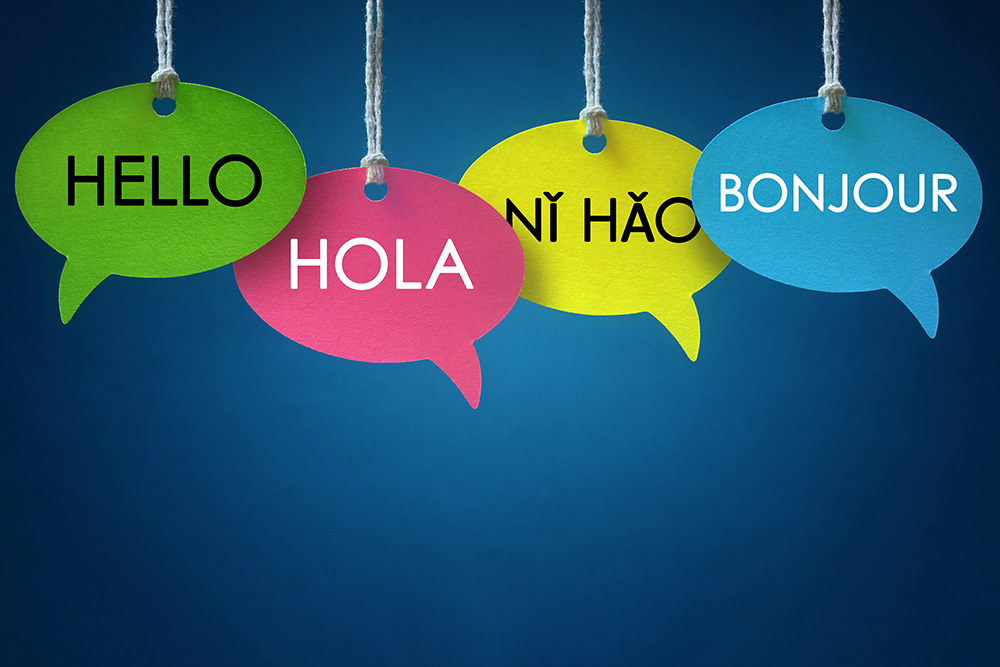
Want an Innovation Boost? Learn a Language
We’re not aiming for linguistic fluency here. In fact, the less of the language you know, the bigger your potential creativity spike!
You’ve probably heard that learning a language boosts brain function and affects so many areas of your life. But can it specifically boost your ability to come up with innovative ideas and solutions?
In my experience from learning parts of at least seven languages (some, I will admit, quite poorly, but you’ll see how that’s an advantage in a moment), I’ve seen increased creativity in myself and those around me.
Let me explain how. (This blog post is not sponsored by any language learning app or dictionary or country or potential girlfriend/boyfriend.)
The Linguistic Chasm
Recently I spent a few days holidaying with family. I happen to be related, by marriage, to a very generous, very loving, very forgiving Chinese family members who (for this visit) purchased a massive bag of cocktail frankfurters that lasted the six of us four days! (A total boon for me, since I am extremely partial to a hot dog sausage.)
I mention their forgiveness, because there was a measure of a language gap. My Chinese continues to rust the longer it’s been since my time in China, but my Chinese restored just enough for me to get myself into conversational situations and not always enough to get myself out of them.
I relearnt the age-old adage that when trying to translate a double negative (“there is no way I wouldn’t eat one of those!”), just throw both negatives out the window and say exactly what you mean. I recalled swathes of vocabulary that I hadn’t heard in years but now suddenly came rushing back in context (the context being key!) and then found myself the next day unsure of how to use them. And I leant even more heavily on my tendency towards mime.
I found myself in startling moments where I had no idea what was going on (like utter confusion as to whether I was or was not supposed to boil the kettle). And I ate a pig’s trotter for the first time in my life (as far as I recall, though it was such a sensorially intense experience that I doubt I would have forgotten it!).
So now that I am sitting in my home office, reflecting on the experience, I keep coming back to how cross-cultural experiences can noticeably boost the creative muscle that results in innovative thought. Let me explain further and convince you to give it a try. Because if any of the above would have made you uncomfortable, then that’s exactly the spot you want to lean into!
Experiencing Unique Words and Concepts
First, let’s focus on the highlight of learning language: finding words and idioms and thought processes that you’ve never come across in your language and culture.
I’ll illustrate this with one of the first Chinese idioms I ever learned. Jing di zhi wa (井底之蛙), literally meaning “the frog at the bottom of the well.”
The figurative meaning is “a person with a narrow outlook and little experience.” Why? Because a frog at the bottom of the well can only see a small circle of sky. He doesn’t understand how big that sky is and the rest of the world that surrounds him. He only has a limited understanding from his viewpoint.
One of the reasons I enjoyed living in another country in my early twenties is because I didn’t want to be a frog at the bottom of the well. But there is no way in my language to put that concept across so succinctly. Chinese does it in four characters.
There are so many examples of situations where a different language and culture encapsulate concepts and experiences in ways that are just not even on our radar. But they become part of our experience as soon as we encounter them.
Suddenly, there’s a word for that urge you get to pinch something incredibly cute (gigl from Tagalog). There’s a word for the pattern of sunlight filtering through tree leaves (komorebi from Japanese). There’s a word for looking worse after a haircut than before it (age-otori from Japanese).
Encountering these words and concepts helps you feel a sense of shared humanity. But each culture and language also helps you become less like a frog at the bottom of the well. Maybe you never noticed the dappled light through tree leaves, but now you know there’s a word for it, you’re more likely to notice it in the future.
How does this all come back to a work environment? These words and concepts are all part of the input your brain needs to make the connections that result in ideas. They train your brain that your way of viewing the world and describing the world is just one way. The people and languages and cultures around you provide other ways of viewing it.
And one of those viewpoints might hold the answers you need for your next project meeting. So start looking for the alternatives, the variations, the insights unique to each culture, and appreciate how a different viewpoint can unlock a deeper understanding.
Experiencing Mandatory Limitations
There’s no way around it. Learning another language limits you for a considerable time before the vistas of fluent conversation become possible. And, let’s face it, for most of us, fluency isn’t achievable. Perhaps because we don’t have the time or the ability or the capacity.
But that in no way means you shouldn’t learn the language. It means you should.
Limitations are a key part to building your innovation capability. Why? Because the right limitations give your creativity something to push against. Something to work with or around.
Having no limitations means you can do whatever you want whenever you want without any issues. But that’s not life in general, and it’s especially not work life. Work life comes with work hours and co-working challenges and deadlines and budgets.
You need to train your brain how to work within your limitations instead of wishing they weren’t there. And language learning is a great way to do that.
For example, I don’t know the word for elbow in Chinese. You’d think by now I’d have learned it. But I haven’t. You know why? Because whenever I need to say “elbow” I know I can either point to it (mime is a key component in language learning) or I can say, “the thing between my hand and my shoulder” (two words I do know, thanks to the song Head, Shoulders, Knees, and Toes which concludes with clapping hands).
Language learning makes you work with the vocabulary you have. It makes you a creative speaker before you’re ever a fluent speaker. You gesture. You play charades. You cobble together what you do know to get around what you don’t.
(And if you’re reverting to your native tongue and/or using a translator app, you’re doing it all wrong.)
You’re teaching your brain that it’s flexible; that it can get around difficulties by making connections it hadn’t made before. The more you can encourage those unusual and new connections, the more your brain looks for other situations where a new connection might unlock an idea or thought or possibility you’ve never contemplated before.
And that “other situation” might just be your next meeting.
Experiencing Humility
Language learning, when done right, is a humbling experience. (Seriously, ditch the translator app. You won’t learn anything other than how to use the translator app. Use an app that will teach you the language rather than do it all for you.)
We become suddenly childish and illiterate all at once. We make ridiculous mistakes (if we’re doing it right). We get completely lost in everyday situations.
And that’s all excellent.
Because it’s reminding us that we don’t know everything. That we’re good at a handful of things (our native tongue being one of them) and yet there are so many other things that other people are far better at than us! That’s a healthy dose of reality.
It builds empathy, because when we see someone struggling with our own language, we recognize that language learning is hard and we don’t judge them as stupid. (I’m so grateful my native language is English, because I don’t think I’d have the patience to learn it as a second language!)
Humility and empathy are key qualities that support innovative thought. Understanding you don’t have all the answers builds curiosity and openness to the input of other sources (coworkers included). Considering the needs of your clients, customers, and/or fellow team members helps you build a solution that better meets their requirements and may just achieve something no one else has thought to include.
For some, the humility hit is the part of language learning that makes them most uncomfortable. But it’s a wonderful opportunity to experience it in a controlled and (usually) low-stakes situation.
So lean into it. Learn new words. Work within your limitations. And let the humility sink in. Then see how those skills can translate back into your innovation-ready workplace.
If you’d like to see how to put these things into action practically, I run a free partner newsletter to this called The Bright Idea Bulletin that covers punchy, actionable tips to build innovation capability.
Discover more from Creative Ark
Subscribe to get the latest posts sent to your email.